
Buying a Used Truck: Ask for Battery, Starting and Charging Test Results
A start-up video is useful, but a used-truck purchase needs clearer electrical evidence. Request battery identification, individual battery test results, cable checks and a starting-and-charging report tied to the actual vehicle. Record the test conditions and resolve repair or retest requirements before accepting the truck.
Identify the fitted battery bank before comparing readings
Ask for legible battery labels, the number of batteries, their connection arrangement and the vehicle electrical specification. Record each battery’s technology, rated voltage, cold cranking amps (CCA) and rating standard, plus available installation dates. Have the workshop confirm the arrangement against the actual truck’s service information; do not infer it from the model name or a photograph of the cab.
East Penn’s commercial-truck AGM guidance cautions against mixing AGM, gel and flooded technologies within one battery pack and calls for compatible age and ratings. That guidance does not establish which battery belongs in your truck. Ask the technician to identify mismatches and check the vehicle and battery manufacturers’ requirements before proposing replacements.
Request condition photographs before repairs hide the findings
Request dated close-ups of the battery compartment, hold-downs, cases, terminals and accessible cables. Ask the inspector to distinguish observed damage, previous repairs and areas that could not be checked. Photographs taken after cleaning should be labelled accordingly so the report does not lose the original findings.
Caterpillar’s equipment guidance checks the compartment for cracks or electrolyte leakage and examines hold-downs and terminal security; it also directs owners to the applicable operation and maintenance manual. These are useful inspection prompts, not a Cat procedure for every truck. Have a competent workshop use the actual vehicle’s isolation and safety instructions.
Separate state of charge from each battery’s tested condition
Delco Remy’s troubleshooting sequence assesses individual batteries before evaluating other starting and charging components. Ask for a result linked to each battery, rather than only one reading across the whole bank. The report should state charge preparation, battery temperature, test method, entered rating and the result under the applicable procedure. Open-circuit voltage alone should not be presented as the complete condition test.
East Penn explains that recent charging can affect conductance-test accuracy and that AGM batteries need a suitable tester setting. Ask whether these conditions were addressed and retain the printout or measured results. Use the fitted battery’s instructions for preparation and interpretation; a voltage threshold or rest period from another battery or test method is not a universal acceptance rule.
Include the cables, starting circuit and alternator
A battery-only pass does not document the whole electrical system. Delco Remy separately checks starter-cable voltage drop, the starter control circuit, charging-circuit voltage drop and alternator output. Request the relevant results and the workshop’s interpretation for the installed system, including any tests omitted and why.
For charging results, record engine speed, applied electrical load and the alternator rating used for comparison. For cable checks, identify the circuit and test load. Keep these results separate from the start-up video: a successful start is an observation under those conditions, not a substitute for the component tests. Do not apply one manufacturer’s example limits to another installation without confirming applicability.
Agree repairs and retain a traceable retest report
Keep the vehicle identification, inspection date, tester details, readings, photographs and conclusions together. If batteries, cables, terminals, the starter or alternator need attention, list the agreed work and require the relevant checks to be repeated afterwards. Mark an untested circuit as untested rather than assuming a new battery has resolved every symptom.
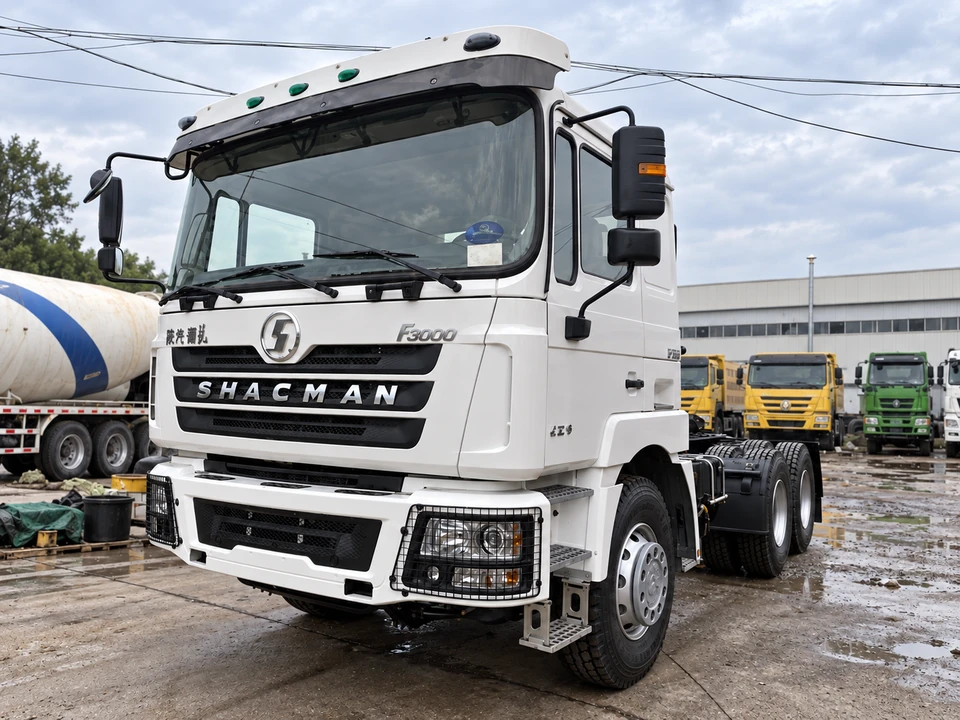
In your enquiry, state the truck model, quantity, destination and whether you need a battery and starting-and-charging inspection report. Confirm who arranges the inspection and which evidence is included in the offer. The SHACMAN photograph is a catalogue illustration; it does not show the condition, battery technology or electrical equipment of a particular truck offered for sale.