Buying an Excavator for Attachments: Check Auxiliary Hydraulics
Match the actual excavator and intended attachment using documented hydraulic requirements, circuit functions, mounting details and weight limits. Visible auxiliary pipes or a matching carrier weight class alone do not establish compatibility.
Identify the machine and the tool you intend to use
If you are buying an excavator to use a hydraulic attachment, confirm the proposed pairing before accepting the machine specification. Provide the excavator's exact model, serial reference and configuration, plus the attachment manufacturer, model and intended work. A statement that an excavator is 'breaker-ready' leaves important details to confirm.
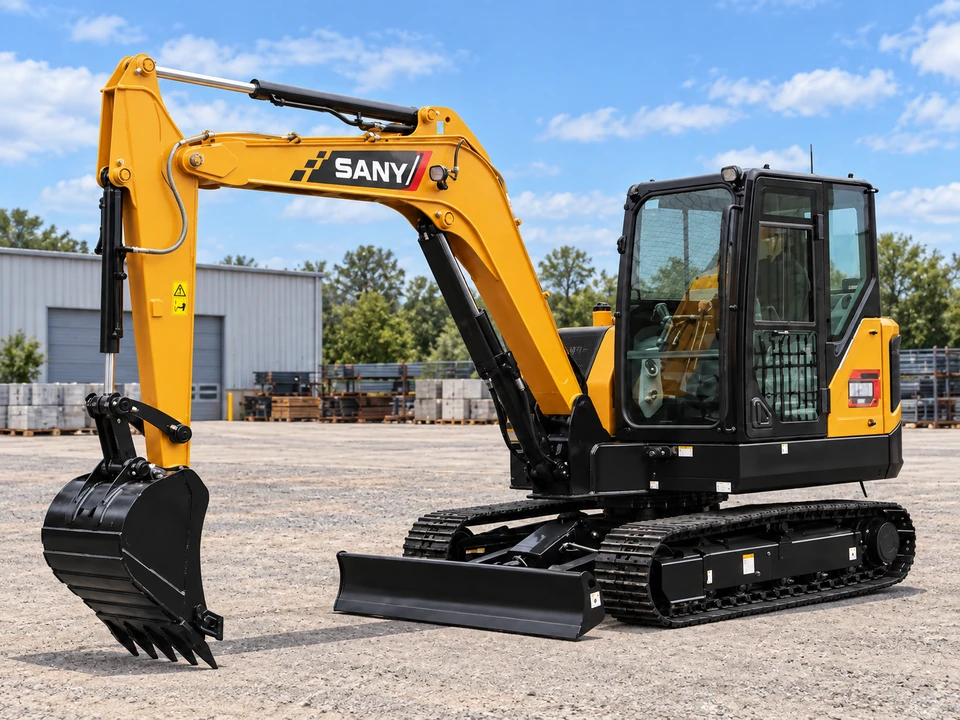
Caterpillar explains that its field-installed hydraulic kits depend on the machine's serial-number prefix and configuration. That example shows why a model-family brochure cannot identify every offered machine's equipment. Request current photographs and a written list of the actual auxiliary components and controls. The excavator image on this page illustrates a catalogue machine, not a verified attachment package.
Compare documented flow and pressure requirements
Ask for the attachment's specified oil-flow range and operating-pressure requirements, with units and the applicable manual or data sheet. Request the excavator's documented auxiliary-circuit capability for the offered configuration. Do not substitute a general machine pump figure for an attachment-circuit specification without the manufacturer's confirmation.
Epiroc's SB 202 page lists carrier class, attachment weight, oil flow and operating pressure as separate fields. These are distinct checks, and its figures describe that particular breaker. Caterpillar likewise advises checking whether the carrier can supply the hammer's required pressure and flow. Ask a qualified hydraulic specialist to resolve any mismatch; do not assume that more available flow is always beneficial.
Check circuit functions, connections and mounting
Caterpillar's kit guide distinguishes one-way and two-way flow arrangements and different tool-control functions. Tell the supplier whether the proposed tool needs a single function or additional functions such as rotation. Request a written circuit description for that exact tool; seeing hoses along the boom does not confirm the available functions or settings.
Identify the mounting bracket or quick coupler by manufacturer and model, with the relevant interface drawing. Ask which hoses, connectors, controls and adapters are included. Have the supplier document the tool's supply and return connections and any additional lines required by its manual. Matching a mounting connection does not, by itself, settle hydraulic compatibility.
Review attachment mass and carrier configuration
Request the attachment's working configuration and weight definition, including the applicable adapter, coupler and working tool. Provide the excavator's boom, stick, counterweight and other relevant configuration details. Have the machine manufacturer or a competent specialist confirm that the proposed arrangement is suitable for the intended work and its stability requirements.
Epiroc qualifies its published carrier-weight guidance as applying to standard carriers and requires agreement for variations. Caterpillar also warns that an overly heavy hammer can make a carrier unstable. A carrier-weight range is therefore a starting reference, not a complete approval for every machine in that class. Do not infer a permitted working load from attachment weight alone.
Agree verification and the supplied package before buying
For a used excavator, ask a qualified workshop to assess the auxiliary system's condition and document the checks actually completed. Where a flow or pressure test is needed, have competent personnel follow the applicable manufacturer procedures and record the machine reference, test conditions, findings and unresolved items. A photograph of pipework is not a performance test.
Put the agreed machine, tool references, hydraulic equipment, mounting parts, inspection evidence and outstanding work on the quotation. Separate fitted equipment from proposed upgrades and confirm destination workshop support. An excavator listing does not mean a breaker or another attachment is included or available. Send the intended job and attachment requirements with your enquiry so suppliers can quote the same documented package.