Buying a Wheel Loader: Match the Bucket to the Material
Choose a loader and bucket together using the material, loose bulk density and actual loading task. Compare documented load limits, bucket design and discharge dimensions instead of choosing the largest advertised volume.
Start with the material, not the bucket's volume
A suitable wheel loader purchase matches the machine and bucket to the material being handled. Record the material type, its loose bulk density, moisture condition and whether it is dug from a bank or collected from a stockpile. Ask how the density was established; a generic material name is not a measured loading brief.
Bucket volume describes space, while the carried material also has mass. The same volume of different materials can impose different loads. Caterpillar's selection guidance therefore relates bucket sizing to material density and machine size. Send the same material information to each supplier and label uncertain figures as estimates before comparing offers.
Separate rated volume from expected bucket fill
Request the bucket's capacity label, units and rating method on its specification sheet. Ask what the supplier means by a full bucket. Caterpillar defines fill factor as the proportion of available rated volume actually used, and explains that buckets can carry above that reference volume. A quoted cubic-metre figure alone does not describe every load.
Fill also depends on the material and the loading arrangement. Caterpillar identifies penetration, breakout force, rollback angle, bucket shape and cutting tools among the influences. Do not treat a demonstration with one loose material as a guaranteed fill factor for another job. Ask for the assumptions behind any payload or production estimate, with the actual machine's limits checked separately.
Match the bucket design to the handling task
Describe whether the work involves stockpile rehandling, digging, abrasive material, grading or loading a particular truck or hopper. Bucket shape and the cutting edge deserve their own quotation fields. Volvo's guidance distinguishes buckets intended for different material-handling tasks and explains why the largest bucket may not be the easiest to fill.
Include travel distance and ground conditions in the discussion. Volvo also highlights transport distance and spillage when choosing a bucket. Ask the supplier to justify the proposed bucket type and wear protection against your duty. Manufacturer examples explain selection principles; they do not establish which attachment is fitted to the catalogue loader shown here.
Check the complete machine and attachment combination
Identify the exact loader model, boom arrangement, bucket reference and mounting or quick-coupler system. Request written compatibility confirmation and the manufacturer's load limits for that offered combination. Caterpillar cautions against a bucket that exceeds the loader's recommended lifting capacity. Physical attachment fit is not, by itself, evidence of an acceptable working load.
Ask for bucket weight, discharge clearance and reach in the proposed configuration, then compare them with the receiving truck or hopper dimensions. If the offer lists a tipping-load figure, ask a competent specialist to distinguish it from the permitted working payload. Do not approve a combination solely from bucket volume or a video of a raised load.
Keep the agreed configuration with the quotation
Send the material brief, intended work, receiving equipment, destination and quantity together. Request an itemised offer identifying the machine, included bucket, cutting edge, coupler if any, supporting specifications and unanswered checks. For a used machine, ask for identification photographs and an inspection of the actual attachment and mounting condition before acceptance.
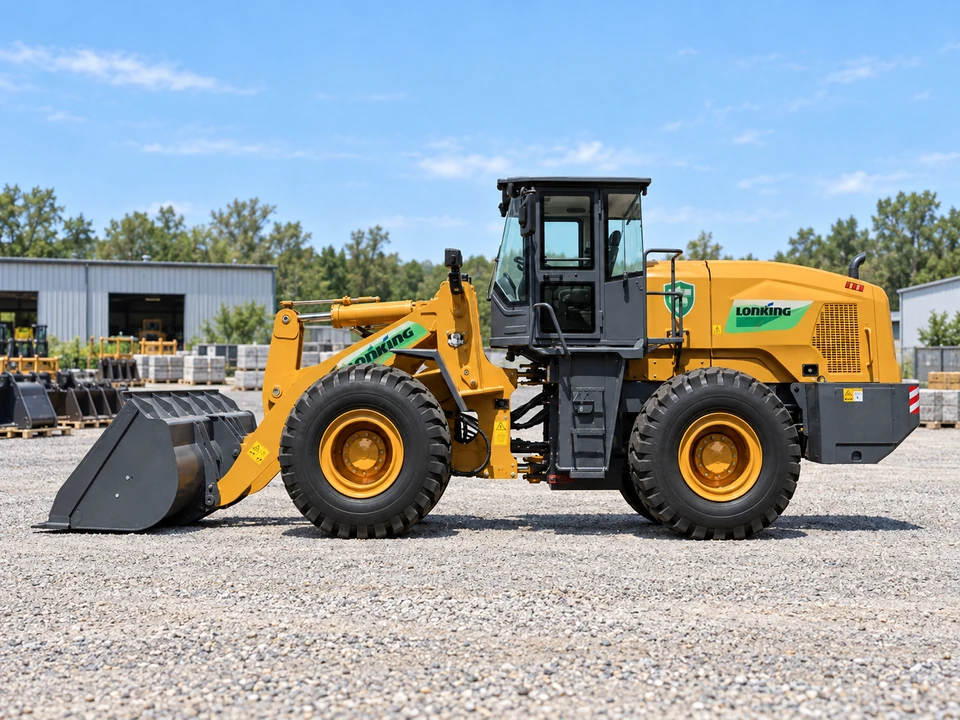
Keep estimates separate from confirmed ratings and agree how outstanding questions will be resolved. This guide does not assign a bucket capacity, payload, condition or availability to the pictured loader. Use the construction machinery catalogue to identify a starting point, then request the actual offered configuration and documents through your enquiry.
Sources and further reading
- Caterpillar — Wheel loader bucket selection by application, material density and machine size
- Caterpillar — Bucket fill factors and the conditions affecting them
- Volvo Construction Equipment — Wheel loader bucket shape, material and transport distance
- Caterpillar — Bucket types, loader lift capacity and attachment options