
Buying a Used Wheel Loader: Check the Engine Air Intake
For a used wheel loader working around dust, request evidence about the complete engine air-intake path, the fitted air cleaner and its service records. Include the applicable restriction indication or measurement and its test conditions. A newly fitted element or a clean-looking housing alone does not document the condition of the intake system.
Identify the engine air cleaner actually fitted
Start with the loader model, machine serial number and engine identification. Request legible air-cleaner and element references, plus photographs showing how the assembly connects to the engine. Ask the inspector to identify any pre-cleaner, dust valve, restriction indicator and safety element actually present. Record missing or unreadable identification instead of assuming every loader uses the same arrangement.
Donaldson’s product guide contains different service instructions for different air-cleaner families. Use those examples to explain why the assembly must be identified, then obtain the applicable machine and air-cleaner instructions. A similar-looking filter or matching housing diameter is not sufficient confirmation of the correct element, sealing arrangement or service procedure.
Inspect the air path beyond the filter element
Request an inspection covering the inlet, fitted pre-cleaner or dust valve, housing and cover, mounting points, connectors and piping towards the engine. Ask for close-ups of damaged parts, loose connections, repairs and inaccessible areas. A competent technician should follow the machine’s safe isolation and inspection procedure; photographs do not require an unnecessary filter removal.
For example, Donaldson’s FKB service instructions check cover seating, clamps, connections and holes in piping. Other families have their own details. The buyer’s question is whether the complete installed path has been checked for sealing and damage, rather than whether the seller has photographed a replacement element. Document the findings and the applicable repair requirements.
Put restriction evidence in its operating context
Ask which indication or measuring method the installed system uses. Retain the observed reading or warning, the inspection date and any known recent reset or filter replacement. If a measurement is taken, request the units, measuring point, engine speed, load and procedure used. Ask the workshop to compare the result with the applicable engine or machine limit. Retain any scheduled replacement requirement in the applicable manual.
Donaldson’s restriction guidance says filter appearance alone is not a reliable service decision and notes that an operating-speed reading does not equal full-load restriction. Do not copy a limit from another engine or treat an idle photograph as a comparable test. Restriction evidence addresses that measurement; it does not replace the separate inspection of housings, seals and piping.
Review service records without creating extra contamination risk
Ask when the element was changed, which part was installed, why the work was performed and what was checked afterwards. If a housing must be opened for necessary service or investigation, leave the method and contamination controls to the technician following the correct instructions. Donaldson warns that repeated opening and element handling can introduce contamination or lead to incorrect installation.
Caterpillar’s Cat-equipment guide distinguishes cab filters from engine air filters, describes mechanical or electronic engine-filter indications and checks the engine-filter dust valve. It also warns that cleaning can damage filter media. These are Cat guidance examples, not confirmation of your loader’s equipment. Confirm the fitted filter’s permitted service method; do not request washing or compressed-air cleaning as a default handover treatment.
Agree the follow-up before accepting the machine
Keep the identification, inspection photographs, restriction evidence, service history and unresolved findings in one report. Where damage, suspected contamination or an out-of-limit reading needs investigation, ask the workshop to define the further checks and agreed corrective work. Retain the relevant post-repair findings. A new element alone should not close an unresolved intake-system concern.
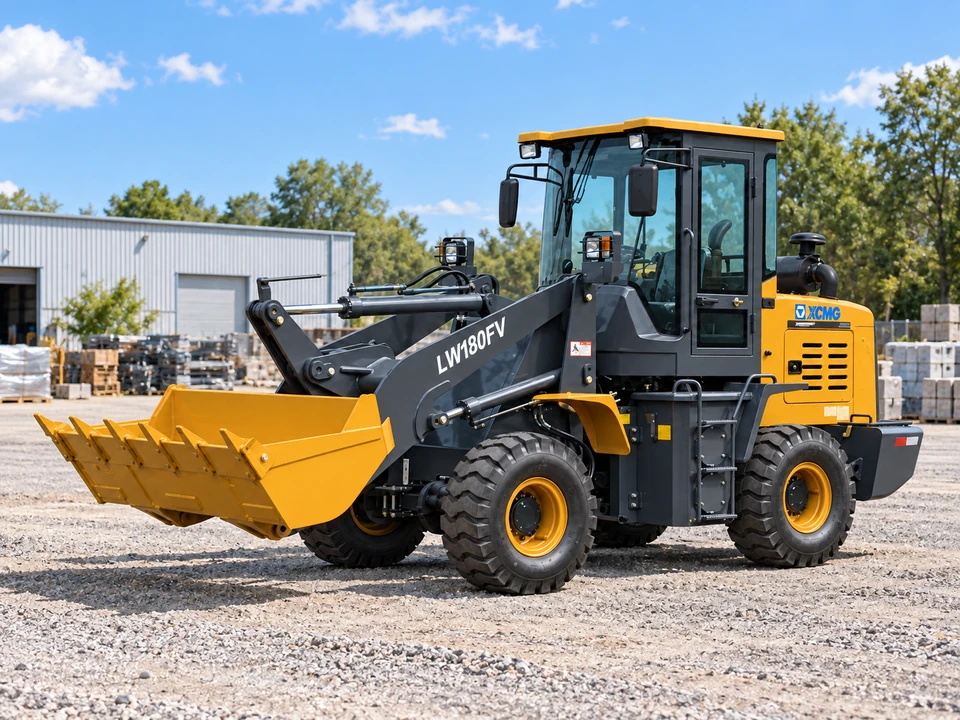
For an enquiry, state the loader model, quantity, destination, expected materials and dust conditions, and request the available engine-intake inspection evidence. Confirm who arranges the inspection and what the quotation includes. The XCMG photograph is a catalogue illustration; it does not establish the pictured machine’s air-cleaner brand, indicator, filter arrangement or condition.