
Buying a Flatbed Trailer: Check Cargo Securing Points Before You Buy
Describe the actual loads and ask for documented securing-point locations, permitted loads and compatible equipment on the trailer offered. A photograph or a large number of attachment points alone cannot establish that a planned cargo-securing system is suitable.
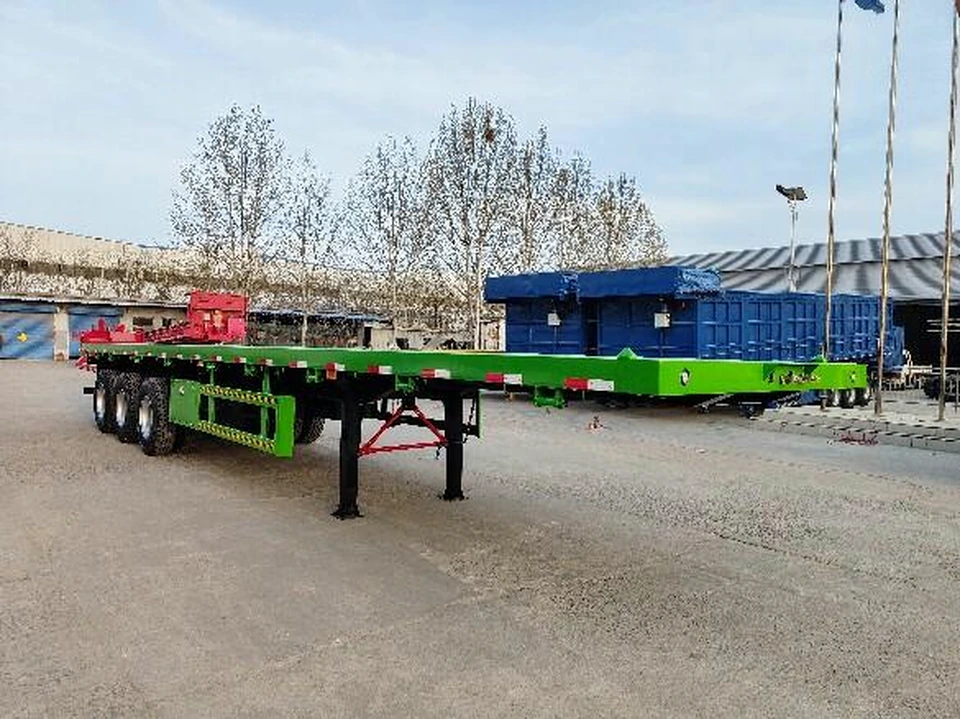
Describe the cargo and how the trailer will be used
Before ordering a flatbed trailer, tell the supplier what you plan to carry: the cargo type, individual item dimensions and weight, loading method, journey and destination. Explain whether the load is palletised, long, wheeled or transported in containers, and whether the trailer will carry several different loads. A solution suitable for one cargo may not suit another.
Ask the supplier and a competent transport operator to review the actual load and planned route together. Confirm the vehicle and axle load limits, required loading space and applicable local requirements separately from the cargo restraint plan. This page is a purchasing checklist, not instructions for securing a load.
Request the locations and ratings of securing points
Ask for a drawing of the exact trailer showing the securing points, their locations and permitted load or working-load information. Check whether the positions work with the intended cargo and access for the planned restraints. Ask which parts are approved attachment points; a hook, rail or opening seen in a photo is not automatically a rated load-securing point.
KRONE describes its Multi Safe system with individual-point and cumulative load limits for a particular side-frame system. This is an example of why both the individual rating and any combined or local restrictions matter. Its published values apply to that system, not to the trailer pictured here or another supplier’s product.
Check the complete restraint equipment
Ask which straps, chains, connectors, edge protection and other equipment are included in the quotation, and request their identification and documented ratings where available. Confirm that the intended hooks and fittings can connect to the trailer’s approved points and the cargo without damage. A rating for a strap alone does not establish the capacity of the complete arrangement.
The UK Driver and Vehicle Standards Agency explains that an attachment point must withstand expected loads and that a chain restraint is limited by its weakest component. Compare the proposed components and their condition as a system. Ask a qualified specialist to determine the method and equipment for the actual cargo rather than choosing a quantity of straps from a generic example.
Inspect condition and distinguish container locks
For a used trailer, request an inspection report and dated photographs covering the deck, securing points, surrounding frame and any previous repairs. Ask the inspector to document deformation, corrosion, cracks or missing components and identify findings requiring assessment. Do not assume that repainting or a visible attachment point proves its present strength.
If the trailer is offered for intermodal containers, ask for the locations, condition and intended container sizes of the container locks, and obtain the relevant manufacturer documentation. Container locks and general cargo lashing points serve different purposes: one does not automatically replace the other. The catalogue photo illustrates a trailer type, not verified locks or ratings on a particular unit.
Confirm the plan, documents and delivery scope
Ask for the proposed trailer specification and securing-point documentation to be linked to the actual quotation. List included equipment, unanswered questions and any inspection or repair commitments in writing. Request operating instructions and parts information for the delivered configuration; do not rely solely on a brochure for a different model.
Have the operator or a qualified specialist prepare and verify a load-securing plan for the cargo and jurisdiction before use. FMCSA’s US guidance distinguishes general rules from additional commodity-specific requirements, illustrating why one example does not cover every load or destination. Confirm local rules and the equipment manufacturer’s instructions for the actual journey.