Buying a Used Truck: Identify the Gearbox Before Comparing Quotes
Start with the gearbox actually fitted to the offered truck, rather than a gear count or an 'automatic' label. Confirm its identity, transmission type, documented configuration, maintenance evidence and local service support before comparing quotations.
Identify the installed gearbox, not just the truck model
Before comparing used trucks, ask for the fitted transmission's manufacturer, complete model designation and serial number, with readable identification photographs. Keep these details with the truck's chassis reference. A cab photograph or a listing that says only '12-speed' does not identify the gearbox being offered.
Eaton's identification guide explains that its transmission tag carries the model designation and other identification information. Its model codes distinguish characteristics including torque capacity, forward speeds, ratio set and options. That is an example of why the complete designation matters; do not decode another manufacturer's gearbox using Eaton's naming rules. Ask the supplier to resolve any mismatch between the installed unit and the paperwork.
Clarify what the seller means by automatic
Ask whether the quotation specifies a manual transmission, an automated manual transmission (AMT), or a fully automatic transmission, then verify the exact model. ZF describes its AMT technology as automating clutch and gear-shift actuation. Its separate PowerLine product uses a torque converter. These examples describe different arrangements, even though both can reduce the driver's shifting tasks.
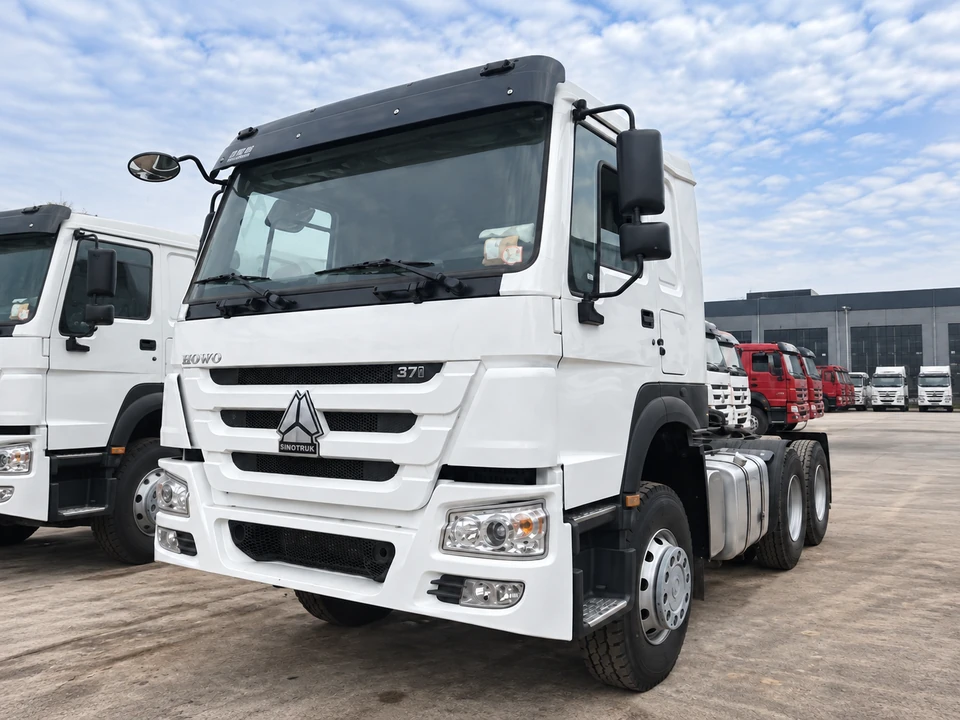
Request the applicable operating manual and identification of the fitted controls. Do not infer the internal transmission design or its condition from the selector alone. Manufacturer examples here do not identify the gearbox in our catalogue photograph, and a transmission category alone does not establish fuel savings, reliability or suitability for your route.
Compare the documented driveline and intended work
Give the supplier your intended load, trailer, road conditions and operating pattern. Request the offered gearbox's ratio information together with the engine, drive-axle and tyre specifications. Ask the vehicle manufacturer or a competent driveline specialist to confirm the proposed combination. Gear count and engine horsepower alone do not answer that configuration question.
If the truck must power a body or pump, include that requirement in the brief. Ask for the fitted or proposed power take-off (PTO) reference and written confirmation of the required interfaces and operating arrangement. Keep included equipment separate from optional installations. A gearbox family name does not prove that the particular PTO or controls needed for your work are supplied.
Match maintenance records to the actual unit
Request dated service and repair records linked to the truck and, where recorded, the transmission reference. Ask what lubricant was used and which manufacturer specification applied. ZF's lubricant directory separates applications by type-plate classifications, including TE-ML 01 and TE-ML 02 for specified truck transmissions. Those labels are examples, not a universal oil recommendation.
Check the current instructions for the exact fitted gearbox before accepting an oil specification or maintenance interval. Ask for evidence of any gearbox, clutch or actuator replacement where applicable, including required setup records. An invoice for an oil change does not document a complete overhaul. Clarify which work is supported by records and which statements remain unverified.
Agree inspection evidence and destination support
Have a qualified commercial-vehicle inspector assess the transmission under appropriate procedures. Request a report identifying the vehicle, inspection conditions, findings and untested items. For electronically controlled equipment, ask what diagnostic checks were possible and request the recorded results. A short shifting video or a warning-free dashboard photograph is not a complete assessment of the unit.
Before accepting the offer, give the exact model references to your destination workshop and ask about suitable service information, diagnostic access and parts support. Put agreed repairs, supporting records, included equipment and unresolved checks on the quotation. Compare those complete offers rather than treating 'manual' or 'automatic' as a guarantee of condition or availability.