
Buying a Used Air-Braked Truck: What a Brake Report Should Show
Arrange a qualified workshop inspection of the actual truck and request findings for each wheel-end, with measurements compared against the fitted brake’s instructions. Identify what was inspected, what remains untested and which repairs need confirmation. New friction material, a clear dashboard or a short driving video alone does not establish the condition of the complete service-brake system.
Identify the brakes and the inspection scope
Record the truck identification and show which service-brake arrangement is fitted at each axle and wheel-end. Request available brake, actuator and adjuster identification, including whether the brakes are drum or disc types. Do not fill gaps in the report by assuming the truck’s model name establishes every component. Ask which current vehicle and component instructions the workshop used.
Agree the inspection scope before comparing offers: accessible visual checks, measurements and any additional dismantling or testing should be identified separately. Have trained, competent technicians decide how to perform the work safely under the applicable instructions. Mark inaccessible or untested items clearly; a photograph of one wheel-end is not evidence that the remaining brakes were inspected.
For drum brakes, keep lining and drum findings together
Ask for the recorded lining thickness and inspection location, plus photographs and findings on uneven wear, cracks or contamination. For the drums, request the measured internal diameter and the technician’s assessment of the friction surface and shape. Each result should identify the component, units and manufacturer’s acceptance reference rather than simply stating that the brakes look good.
Cummins’ drum-brake maintenance guide discusses lining condition, drum wear and out-of-round or bell-mouthing checks, as well as S-cams and related hardware. Use these as prompts for the workshop’s report. Its example drum dimensions and regional inspection references are not universal limits for a different truck. The fitted drum and brake manufacturer’s instructions must govern the assessment.
For disc brakes, include the caliper and rotor
Cummins’ air-disc-brake guidance covers friction-material thickness, uneven or tapered pad wear, caliper movement, protective boots and retaining hardware. It also calls for examining both rotor faces for cracks, heat damage and scoring. Request the applicable findings for each fitted disc brake, with measured results where the manufacturer requires them. Do not infer the required procedure from a similar-looking caliper.
Keep pad, rotor, caliper and chamber findings linked to the same wheel-end. If new pads have already been installed, ask for the associated inspection and repair record rather than treating their appearance as a complete brake-system assessment. Record any component that could not be examined and what further inspection the technician recommends.
Ask how actuator and adjuster concerns were resolved
Where the fitted system calls for a pushrod-stroke check, request the actuator identification, measured travel, test conditions and applicable reference. For automatic slack adjusters, ask for the functional findings and any related brake-component defects. A report should explain an abnormal result and the corrective work, rather than recording only that someone adjusted the brake before handover.
The UK Driver and Vehicle Standards Agency’s maintenance guide explains that manually adjusting an automatic slack adjuster does not cure the underlying cause of excessive pushrod travel. It directs assessment to competent technicians and component-manufacturer information. This is a technical maintenance example, not a global fitment rule: do not transfer its example dimensions or UK vehicle requirements to another installation or market.
Retain the repair evidence and the limits of the report
Keep the inspection date, vehicle identification, workshop details, photographs, measurements, unresolved defects and agreed repairs together. Require relevant post-repair checks to be recorded. If a brake-performance test is included, retain its method, conditions and results separately from the component inspection. Ask a qualified local provider what further inspection is needed for the intended operation; a seller’s condition report is not, by itself, a roadworthiness certificate.
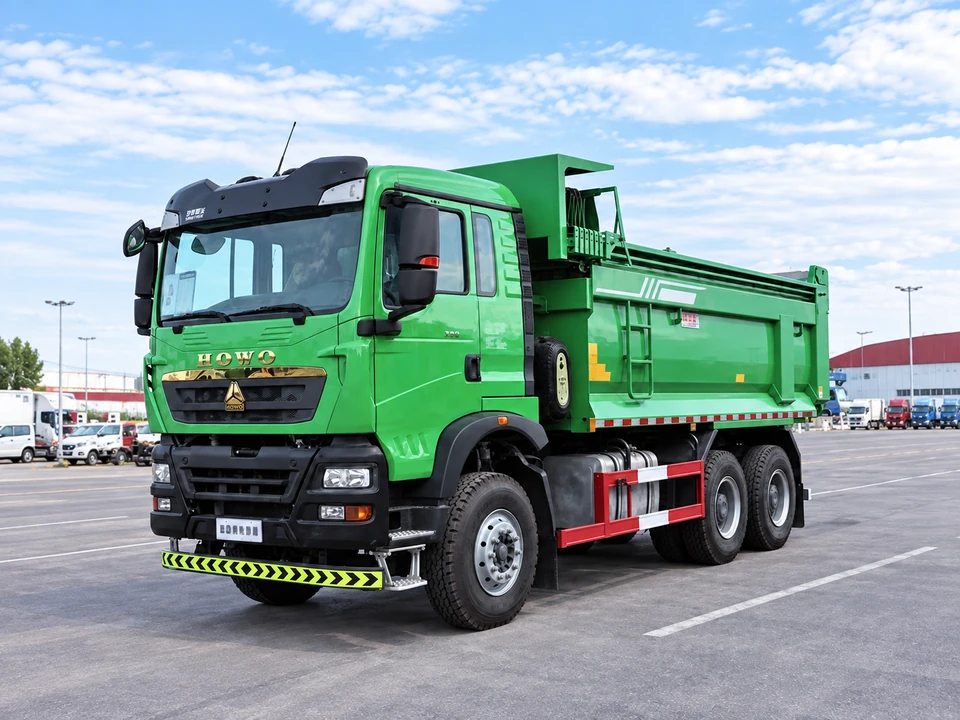
In an enquiry, state the truck model, quantity, destination and work, and ask what service-brake inspection evidence can be supplied. Confirm who arranges the inspection and what the offer includes. The HOWO photograph is a catalogue illustration; it does not establish the brake type, component brand or condition of a particular truck offered for sale.