
Buying a Used Dump Truck: Check the Tipping Body and Hydraulic Lift
Ask for identification, inspection evidence and repair history for the actual dump body and lifting system. A clean truck or a short lifting video alone cannot establish structural condition, safe operation or suitability for your intended load.
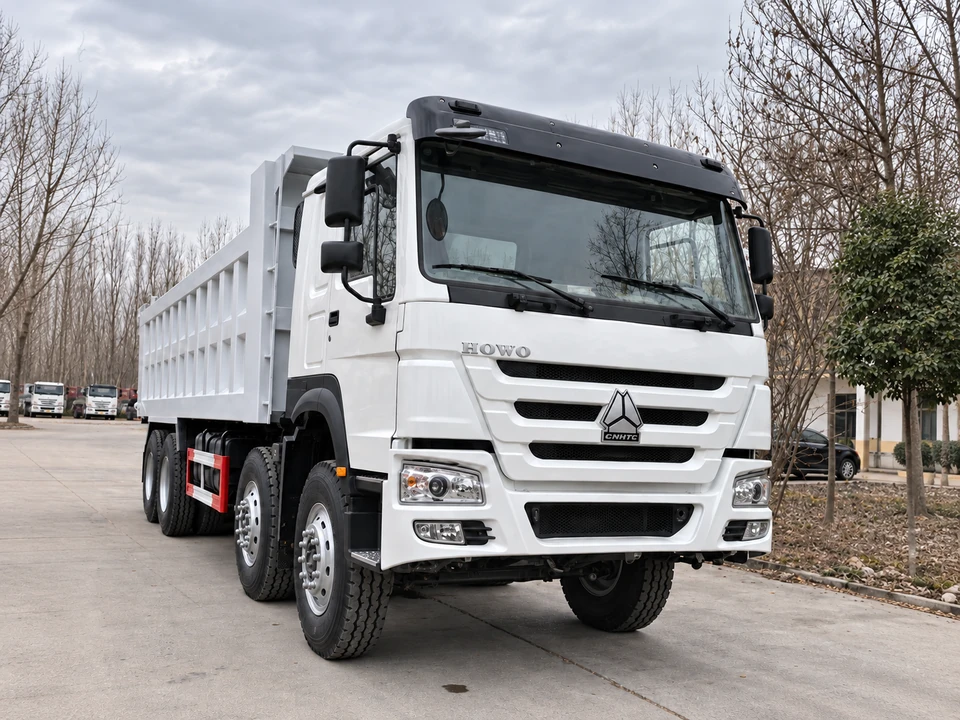
Identify the body and lifting system
Before comparing used dump trucks, identify the exact vehicle and the tipping body offered with it. Ask for vehicle identification, body and lifting-equipment manufacturer and model where available, plus clear photographs of identification plates. Request the relevant operating and maintenance instructions for the actual installation, including any later replacement components.
Describe your material, expected load, work route and unloading conditions. Ask for the body dimensions and documented limits for that particular truck and body, with units and the basis of each figure. A box volume, a cylinder description or a photographed vehicle alone does not establish legal payload or fitness for a specific job.
Request a body and mounting inspection report
Ask a qualified inspector to document the body floor, side panels, tailgate, hinges and body-to-chassis mounting areas. Request photographs and a written description of visible deformation, corrosion, cracks or previous welding, identifying their location and extent. A new paint finish can make the vehicle look clean without explaining the condition underneath.
Ask whether previous repairs have records and whether any structural concern needs evaluation by the body manufacturer or a competent specialist. Photographs are useful for identifying questions, but they cannot by themselves prove material thickness, structural integrity or that an unrecorded repair was performed correctly.
Review hydraulic evidence and service history
Request a report on the hoist cylinder, hoses, fittings, pump and controls, together with available service records and descriptions of any leakage, abrasion or damage. Record the location and appearance of a finding and ask whether it remains unresolved. A recently cleaned system is not evidence that it is leak-free.
For its HV3 cylinder models, Parker lists several possible causes of external leakage and identifies rod surface damage as a concern. That manual is an example, not proof that the truck uses an HV3 cylinder or that one visible symptom has a single cause. Ask a qualified hydraulic technician to assess findings against the actual equipment manual.
Keep inspection and demonstration safe
A raised tipping body can fall or move unexpectedly. HSENI warns that vehicle hydraulic maintenance requires a safe system of work and appropriate support. Do not enter the space between a raised body and chassis to inspect or film it; request that a competent inspector use the equipment manufacturer’s procedure and provide a report instead.
Parker warns that high-pressure fluid can penetrate skin and that switching off a pump does not necessarily remove stored pressure. Never search for a leak by touch or attempt a repair as part of a buyer inspection. Any examination, repair or functional demonstration must be planned and performed by qualified personnel using the actual equipment instructions.
Compare the quotation and unresolved items
Ask the seller to connect the inspection report and any demonstration record to the exact vehicle offered, including inspection date, equipment identification, findings and any limitations. Clarify whether the offered truck is sold in its present condition or whether specified repairs are included before delivery; obtain the agreed scope in writing.
Ask which documents, operating instructions and replacement-part information will accompany the vehicle, and which questions remain open. The UK HSE identifies additional tipping risks such as overhead obstructions and unstable ground; ask your local operator to assess the intended site and applicable requirements. A catalogue photo illustrates a vehicle type, not the condition or configuration of a particular truck.